What to Look for When Buying Baby Strollers Wholesale
Buying baby products in bulk sounds simple until you actually start comparing suppliers. At first, it is tempting to look at the price, check a few product photos, and choose the supplier offering the lowest quotation. But when the product is something as important as a baby stroller, price should never be the only thing on the checklist.
I have found that the real challenge is figuring out whether a stroller is suitable for the customers you want to serve, whether the supplier can maintain consistent quality, and whether the final cost still makes sense after shipping and other expenses.
For retailers, distributors, and online sellers, choosing the right wholesale stroller can make a big difference. A good product can lead to repeat customers, while poor quality can quickly turn into complaints and returns.
Here are the things worth checking before placing a wholesale order.
Start With the Type of Stroller You Actually Need
One of the first mistakes buyers make is choosing a stroller simply because it looks attractive in a supplier’s catalog.
Different customers have different needs.
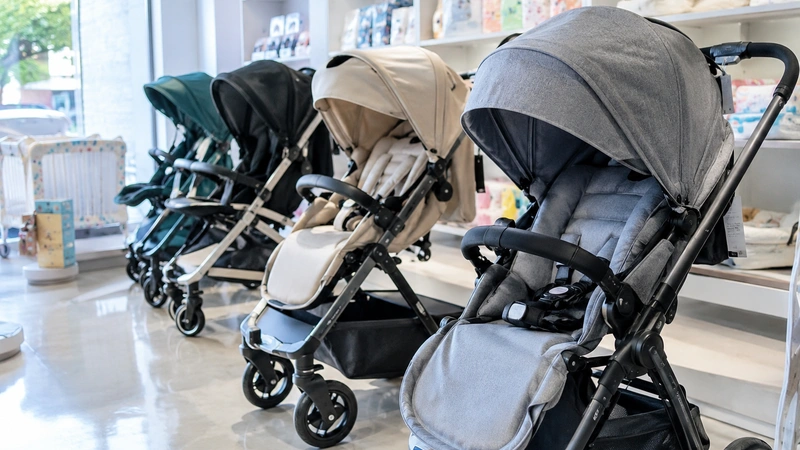
A full-size stroller may be a better option for parents who want comfort, storage space, and something suitable for everyday use. On the other hand, lightweight travel strollers can be more appealing to people living in cities or families who travel frequently.
There are also travel-system strollers that combine a stroller with a car seat. These can be attractive because parents get more than one travel function from a single purchase.
Double and twin strollers are another category, although they naturally have a smaller target audience.
Before ordering, think about your own customers. Are they mainly looking for affordability? Do they care about compact folding? Is storage important? Are you selling online where portability and simple product features are easier to explain?
The answer should influence your product selection more than the number of features listed on a catalog page.
Don’t Make Price Your First Priority
A cheap factory quotation can look attractive, especially when you are calculating a large order.
But the factory price is only one part of the actual cost.
You also need to think about packaging, freight, customs or import expenses, inspection, storage, possible defects, and after-sales issues. A stroller that costs slightly less at the factory may end up costing more if the quality is inconsistent or the packaging is poor.
This is why I prefer looking at the landed cost instead of simply comparing the initial unit price.
For example, imagine two suppliers offer almost identical strollers. Supplier A is cheaper, but the packaging is weak and replacement parts are difficult to obtain. Supplier B costs a little more but provides better documentation, stable production, and after-sales support.
On paper, Supplier A looks cheaper. In a real business situation, however, the difference may not be as large as it first appears.
Safety and Compliance Should Be Checked Early
A baby stroller isn’t an ordinary household product. Parents trust it to carry their child, so safety should be one of the first things a wholesale buyer investigates.
Before paying a deposit, ask the supplier which safety standards apply to the model you are buying and request the relevant testing documentation.
It is also worth checking whether the documentation actually matches the product being offered. A test report is much more useful when you can confirm that it relates to the same model, configuration, and market.
Depending on where you plan to sell, different requirements may apply. For example, buyers targeting the United States need to consider applicable CPSC requirements, while European markets commonly work with standards such as EN 1888 for pushchairs and prams.
Don’t simply accept a message saying, “This product is certified.”
Ask for the actual documents.
Taking this simple step early can help prevent problems later on.
Always Ask for a Sample
Product photos can tell you how a stroller looks, but they cannot tell you everything about how it feels in your hands.
If possible, order a sample before committing to a large quantity.
When the sample arrives, test the folding mechanism several times. Check how smoothly the wheels move. Try the brakes. Look closely at the stitching, fabric, frame, buckles, and locking points.
Pay attention to small details too.
Does the stroller feel stable? Is the handle comfortable? Does the folding mechanism feel unnecessarily complicated? Is the product securely packaged to protect it from damage during transportation?
These are things that are difficult to judge from a specification sheet.
A sample also gives you an opportunity to compare what the supplier promised with what they actually produced.
Compare Suppliers Beyond Their Quotations
When comparing wholesale suppliers, I would create a simple checklist instead of looking only at the price column.
Ask each supplier about:
- Minimum order quantity (MOQ)
- First-order lead time
- Repeat-order lead time
- Available colors
- Logo and packaging customization
- Testing documents
- Spare parts
- Defect handling
- Quality-control procedures
- Pre-shipment inspection
- Shipping and packaging arrangements
Communication is another useful indicator.
A supplier that answers questions clearly and provides specific information is much easier to work with than one that gives vague answers to basic questions.
You don’t necessarily need the biggest factory. You need a supplier whose capabilities match the scale and requirements of your business.
OEM, ODM, or Ready-Made Products?
Another decision comes when you want to sell strollers under your own brand.
Ready-made products are generally the simplest way to get started. You select an existing model, purchase it, and sell it through your chosen channel.
ODM gives you more flexibility. You may be able to customize elements such as branding, packaging, colors, or selected product details while starting from an existing design.
OEM is more suitable when you want a product developed around your own specifications and brand requirements.
For someone testing a new market, starting with an existing or ODM product may reduce complexity. A growing brand that wants stronger product differentiation may eventually move toward more customized manufacturing.
Not every business will benefit from the same approach. The right choice depends on your budget, timeline, brand strategy, and expected order volume.
Look Carefully at the Manufacturing Process
A supplier’s manufacturing process can tell you a lot about how seriously they take quality.
For example, Bebelux describes a production process that includes material inspection, plastic injection molding, metal processing, sewing, fabric inspection, final assembly, durability testing, and packaging checks.
That kind of information is useful because it gives a buyer a better idea of what happens before a finished stroller reaches the shipping stage.
If you’re researching suppliers, a useful starting point is this baby stroller wholesale guide, which covers stroller categories, supplier selection, compliance, MOQ, samples, and wholesale costs.
The important point is not to assume that every factory follows the same process. Ask questions and verify what is actually included in production and quality control.
Don’t Ignore Packaging and Shipping
A stroller can leave the factory in perfect condition and still arrive with damage if it isn’t packaged properly.
This is especially important for wholesale orders traveling long distances.
Ask how the supplier protects the frame, wheels, fabric, and other components inside the carton. If you are placing a large order, discuss whether pre-shipment inspection is possible.
Packaging also affects your own costs. Larger cartons can increase shipping expenses, while poor packaging can increase damage and returns.
For an online seller, this becomes even more important because customers usually expect the product to arrive in excellent condition.
Keep Your First Order Focused
If this is your first wholesale order, there is a strong temptation to buy many different models and colors.
I would be careful with that approach.
Testing a smaller number of carefully selected products can give you much better information. You can see which model customers actually prefer, identify quality problems, understand return rates, and learn how quickly the products sell.
Once you understand the market, you can expand the range.
It is much easier to scale a product that has already proved itself than to manage a warehouse full of different models that you have barely tested.
A Simple Final Checklist
Before confirming a wholesale stroller order, take a few minutes to go through your checklist.
Make sure you have:
- Selected the right stroller type for your target customers.
- Checked the applicable safety requirements.
- Requested current testing and compliance documents.
- Received and inspected a sample where possible.
- Confirmed the MOQ and customization requirements.
- Calculated the complete landed cost.
- Discussed lead times and possible delays.
- Confirmed packaging specifications.
- Asked about spare parts and defect handling.
- Agreed on inspection arrangements before mass production.
This may seem like extra work at the beginning, but it can prevent much bigger problems later.
Final Thoughts
Wholesale baby strollers can be a good product category for retailers, distributors, and online sellers, but the buying process needs more thought than simply finding the lowest quotation.
The right stroller is the one that fits your market, meets the necessary requirements, can be produced consistently, and still gives your business enough room for a healthy margin.
Take time to inspect samples, compare suppliers, understand the real cost, and ask questions before placing a large order. Practical buying guides can also help buyers make better-informed decisions.
A few extra hours of research before the purchase can be far less expensive than dealing with poor-quality products after they have already arrived in your warehouse.